

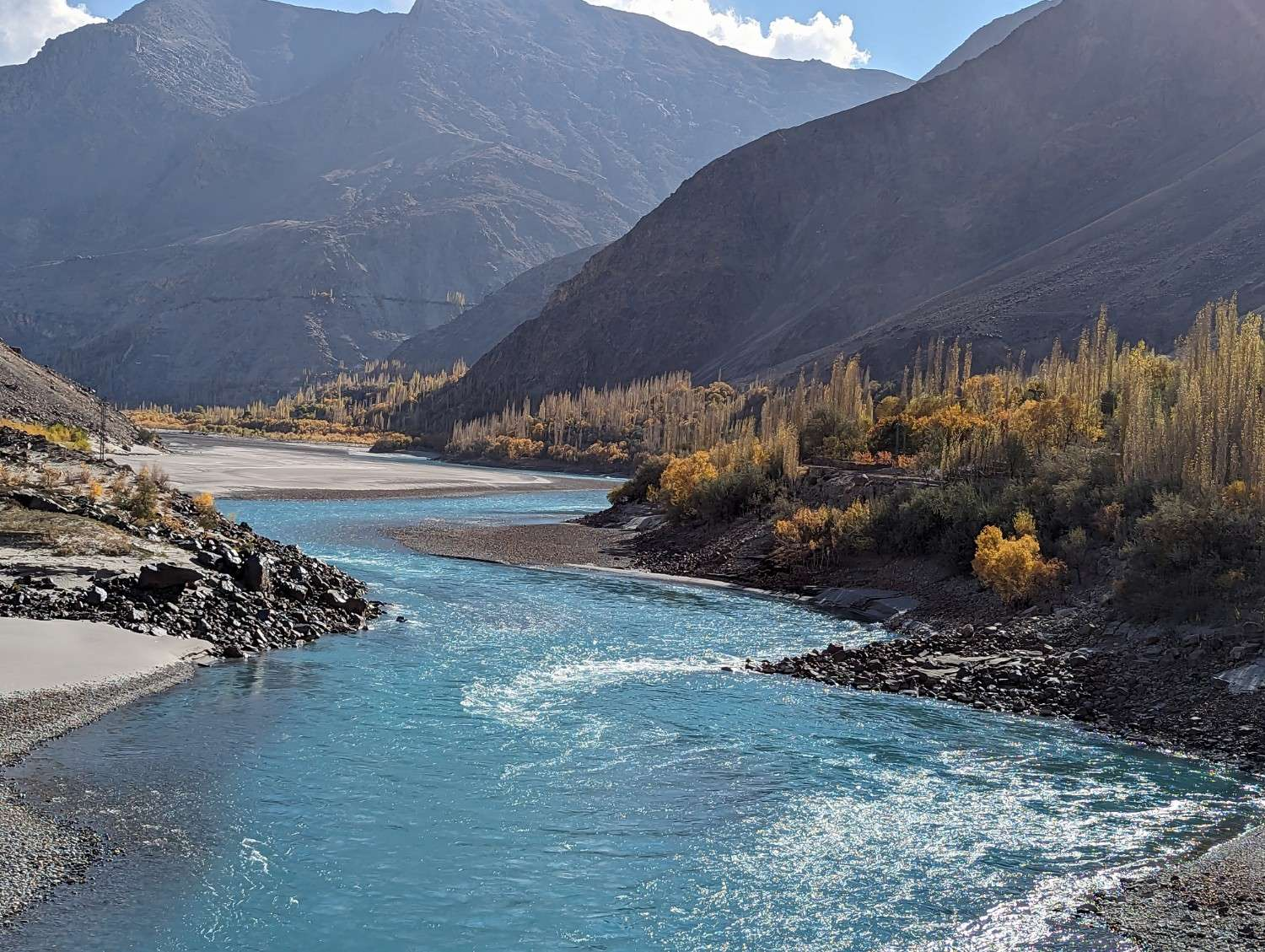
The Indus Waters Treaty (IWT) signed between India and Pakistan in 1960. The treaty classifies the six major rivers of the Indus river basin into two geographical categories: three western rivers – the Indus, the Jhelum and Chenab – and three eastern rivers – the Sutlej, the Beas and the Ravi. Per Article I of IWT, any river/ tributary and its catchment area of the Indus system of rivers that are not part of the other five rivers, is part of the Indus River including its creeks, delta channels, connecting lakes, etcis a water-distribution treaty between India and Pakistan to use the water available in the Indus River system in the territories of the two countries. The treaty was negotiated by India and Pakistan with the mediation of World Bank, and signed in Karachi on 19 September 1960 by Indian prime minister Jawaharlal Nehru and Pakistani president Ayub Khan. It classifies six major rivers of the Indus Basin into two categories, and gives India control over the waters of the three “Eastern Rivers”—the Beas, Ravi and Sutlej—which have a total mean annual flow of 33 million acre⋅ft (41 billion m3), while control over the three “Western Rivers”—the Indus, Chenab and Jhelum—which have a total mean annual flow of 135 million acre⋅ft (167 billion m3), was given to Pakistan.
India received control of roughly 20% of the total water carried by the rivers, while Pakistan received 80%. The treaty allows India to use the water of Western Rivers for limited irrigation use and unlimited non-consumptive uses such as power generation, navigation, floating of property, fish culture, etc. It lays down detailed regulations for India in building projects over the Western Rivers. The preamble of the treaty recognises the rights and obligations of each country for the optimum water use from the Indus system of rivers in a spirit of goodwill, friendship and cooperation. The treaty is also meant to alleviate Pakistani fears that India could potentially cause floods or droughts in Pakistan, especially during a potential conflict.
The Indus Waters Treaty is considered one of the most successful water sharing endeavors in the world today, even though analysts acknowledge the need to update certain technical specifications and expand the scope of the agreement to address climate change.
On 23 April 2025, following the Pahalgam terrorist attack, the Government of India suspended the treaty, citing national security concerns and Pakistan’s support of state-sponsored terrorism.